

Manual-Winding Movements vs. Automatic Movements: Key Differences
Many watch novices confuse one key concept: while all automatic movements are essentially mechanical movements, the Manual-Winding mechanical movements (manual movements) and self-winding mechanical movements (automatic movements) we commonly refer to are the two core, mainstream types of mechanical watch movements. While both rely on the core principle of energy storage via a mainspring, they differ fundamentally in how they derive power, user experience, movement structure, durability, and suitability for different scenarios.
Core Power Source
The core power source for both movements is the “mainspring.” The power that drives the watch’s timekeeping comes from the elastic potential energy released by the mainspring, but the way energy is stored in the mainspring is worlds apart.
Manual-winding mechanical movement(Manual-winding Movement)
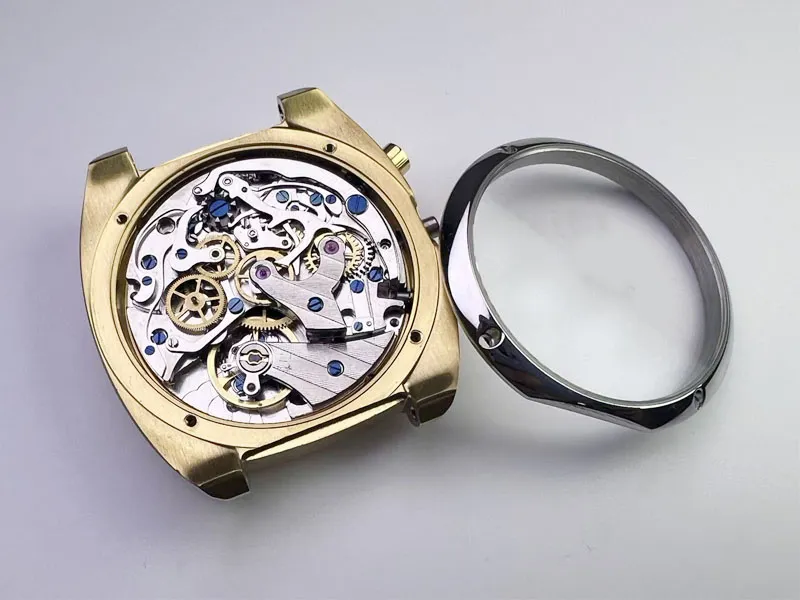
These rely entirely on manual operation for energy storage and have no automatic winding mechanism. The wearer must rotate the crown on the side of the watch to directly drive the movement’s gears, winding the mainspring and converting kinetic energy into the elastic potential energy of the mainspring, which provides all the power for the watch’s operation.
Power supply is entirely passive; the movement cannot store energy on its own. If the watch is not manually wound for an extended period and the mainspring’s energy is depleted, the watch will stop immediately, with no buffer period. In daily use, it is generally necessary to wind the watch once a day; even if not worn, it should be wound every 2–3 days to ensure normal operation.
Self-winding mechanical movement (Automatic Movement)
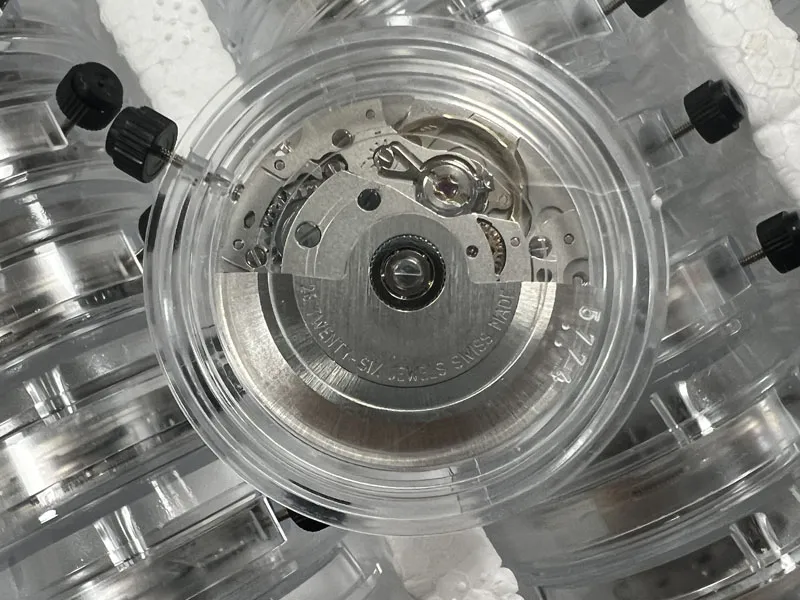
This is an upgraded version of the manual-winding movement, retaining the manual winding function while adding an automatic energy-storage system. The movement is equipped with an automatic rotor capable of 360° rotation. Minor wrist movements—such as raising the arm, swinging the arm, walking, or working—trigger the rotor to swing from side to side.
The rotor’s motion is converted into kinetic energy via a gear train, automatically winding the mainspring and replenishing power. As long as the watch is worn normally, the movement continuously recharges itself, requiring virtually no manual intervention. Manual winding is required only after prolonged inactivity or when the watch has been stopped.
Winding method
Manual-Winding Movement: Supports manual winding only
The winding method is singular and fixed, with no automatic power-replenishment mechanism. Regardless of whether the watch is worn or for how long, the crown must be turned manually to store energy. There is no “automatic winding while worn”; all power must be actively obtained, making it a purely manually operated movement.
Automatic Movement: Automatic as Primary, Manual as Secondary—Dual Compatibility
This is the greatest advantage of an automatic movement, offering dual winding assurance. During daily wear, it primarily relies on the rotor for automatic winding; in special situations—such as prolonged periods of inactivity or when the watch has completely stopped—you can also manually wind it by turning the crown to quickly replenish power and reactivate the watch.
Ease of Use: Exclusive Ritual vs. Maximum Everyday Practicality
Manual-Winding Movement: Requires deliberate care, with an inherent sense of ritual
Manual-winding movements demand a high level of “memory” from the wearer and require meticulous care. If you forget to wind it regularly, the watch will inevitably stop, and when you wear it again, you’ll need to reset the time and adjust the date—a cumbersome process.
However, this need for manual adjustment and daily winding has also become a unique advantage. For watch enthusiasts, manually winding the watch and setting the time is an interactive process between the wearer and the timepiece, filled with a sense of mechanical ritual.
Automatic Movement: Maintenance-Free, Ideal for Daily Commuting
The automatic movement is a practical mechanism designed for everyday wear, with virtually no learning curve. As long as the watch is worn during normal daily activities, the movement will continue to run without the need to consciously remember to wind it, set the time, or perform frequent maintenance.
For office workers and everyday wearers, this significantly reduces the cost of owning a mechanical watch, and it is currently the most common movement type found in mainstream watches on the market.
Power Reserve: Short-Term Operation vs. Continuous Power Supply
Power reserve refers to the maximum amount of time a watch can continue to run after the mainspring is fully wound, while at rest—not being worn—and without any additional energy input.
Manual-Winding Movements: Fixed, Short-Term Power Reserve
The power reserve of standard manual-winding movements is generally less than 48 hours, with entry-level models typically offering 36–42 hours. Once fully wound, the watch relies solely on the energy stored in the mainspring to keep time; there is no additional way to recharge it, so it will inevitably stop once the power reserve is depleted.
Automatic Movements: Longer Power Reserve
Mainstream automatic movements offer a base power reserve of 48–72 hours. More importantly, this power reserve is not a “fixed value”; the movement continuously recharges while being worn, effectively providing an “endless” power supply.
Movement Structure and Quality: Simple Precision vs. Complex Versatility
Manual-Winding Movements: Simple Structure
The core components of a manual-winding movement consist only of basic parts such as the mainspring, gear train, and balance wheel with hairspring.
Fewer components mean a lower probability of failure and reduced risks of wear, jamming, or malfunction.
Automatic Movement: Complex Structure
The automatic movement is an upgrade from the manual-winding movement, incorporating an additional set of components such as the rotor, reversing wheel, and automatic transmission mechanism, resulting in more parts and a more complex structure. This complex structure provides more comprehensive functionality and involves more interconnected components.
Which One Should You Choose?
Both manual-winding and automatic mechanical movements are the heart of mechanical watches, but automatic movements offer a more convenient winding method through the wearer’s daily activities, while manual-winding movements rely entirely on manual operation. Choose the mechanical watch that best suits you based on your wearing habits, usage scenarios, and aesthetic preferences.